





Santander Milla de Oro cultural:
Inauguración de FARO SANTANDER
Si todavía piensas en Santander como «la ciudad de la playa y las rabas», es hora de actualizar el mapa mental.
La capital cántabra lleva casi una década reinventándose como uno de los destinos culturales más interesantes de España, y este otoño ha llegado la guinda: el 8 de septiembre ha abierto sus puertas FARO SANTANDER , el nuevo espacio museístico firmado por el arquitecto David Chipperfield.
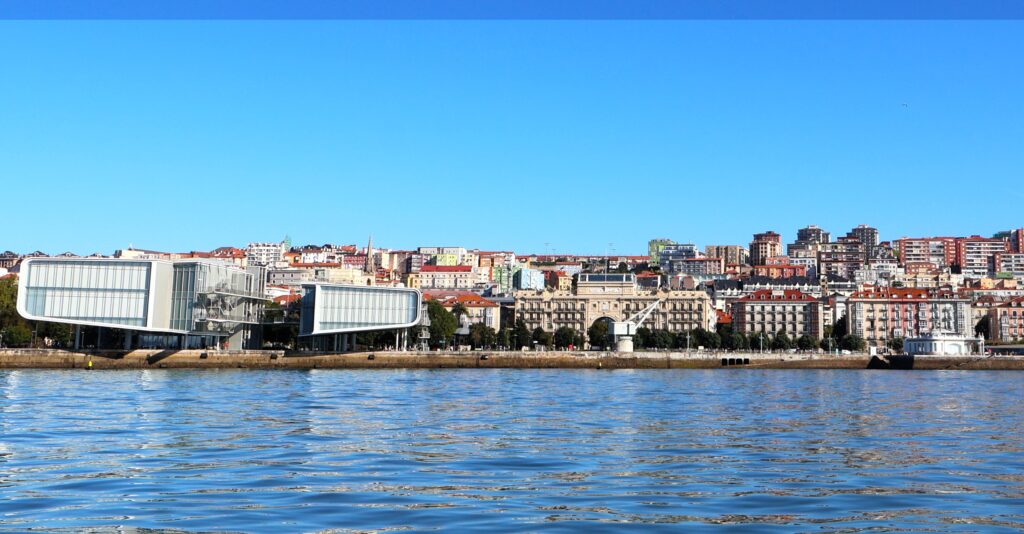
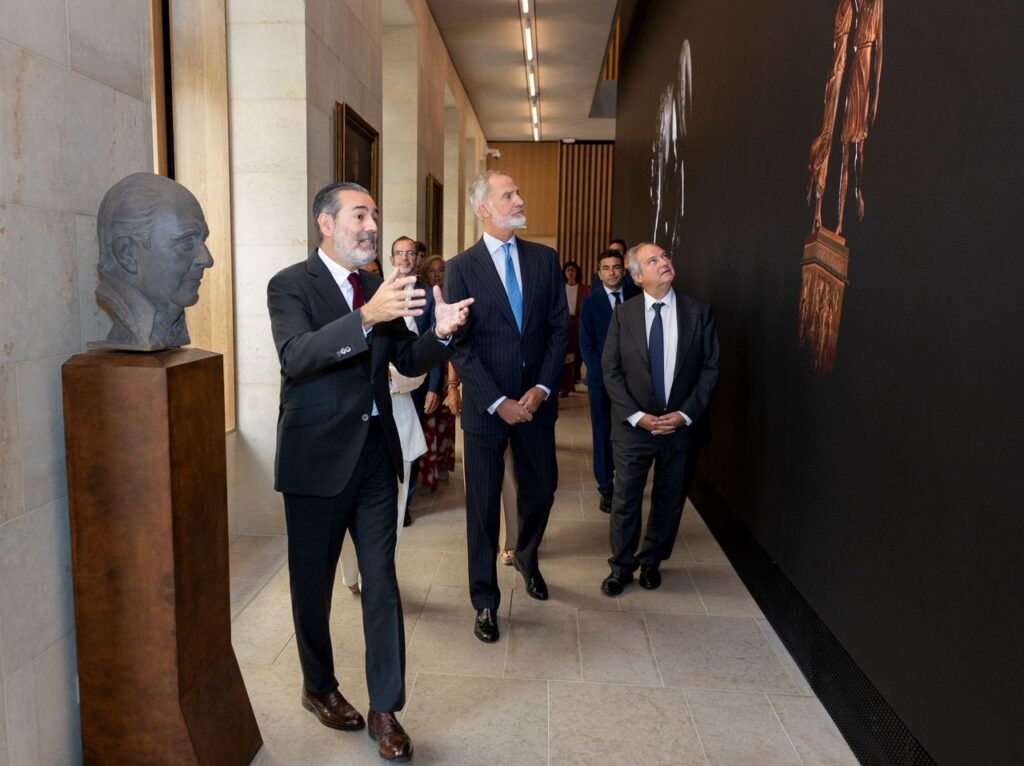
Entrada a Faro Santander
Descubre Faro Santander, el nuevo referente de arte, cultura y tecnología de Fundación Banco Santander en el corazón de la ciudad. Grandes colecciones, exposiciones internacionales, innovación y gastronomía se unen en un espacio único para que lo visites a tu ritmo.
Puedes adquirir tu entrada o pase anual AQUÍ


Y lo mejor: no llega solo. Se suma a un recorrido que ya podríamos llamar sin complejos la «Milla de Oro» cultural de la bahía.
Un paseo a pie de apenas unos minutos donde te vas a cruzar, nada menos, que con dos edificios firmados por Premios Pritzker (el «Nobel» de la arquitectura) situados prácticamente uno frente al otro.
Faro Santander

El edificio que hasta hace poco conocías como la antigua sede central del Banco Santander (el histórico Edificio Pereda, protegido como Bien de Interés Cultural) se ha transformado en un centro museístico de primer nivel.

La reforma es obra del estudio David Chipperfield Architects, con IDOM en la dirección facultativa y Ferrovial como constructora y supone el primer edificio museístico que este estudio construye en España.


Algunas cifras para hacerte una idea de la escala del proyecto:
-
Más de 10.000 m² de superficie útil repartidos en diez niveles.
-
Unos 3.000 m² dedicados a salas de exposición, distribuidos en cinco plantas.
-
Los dos niveles superiores serán para cafetería-terraza y restaurante, con vistas privilegiadas a la bahía.
-
Tres plantas de sótano acogen el auditorio y las instalaciones técnicas.

Chipperfield, que ganó el Pritzker en 2023, ha definido el proyecto como
un gesto de generosidad hacia la ciudad, al convertir un edificio bancario en un espacio al servicio de la cultura y la vida cívica.

¿Y a nivel de sostenibilidad?
Aquí Faro Santander se pone realmente interesante para los amantes de la arquitectura responsable: ha obtenido la certificación BREEAM Excepcional, con una puntuación de diseño de 92,96 puntos, la más alta lograda hasta ahora por un museo o centro cultural en el mundo.
La reforma apostó por reutilizar la estructura existente en lugar de construir de cero (menos residuos, menos emisiones), combina geotermia con termoactivación de la estructura (sistema TABS) para climatizar el edificio, incorpora cubiertas verdes, reutiliza el agua de lluvia para riego y facilita el acceso en bicicleta.

¿Qué se podrá ver en Faro Santander ?
Desde el día de la inauguración y hasta el 10 de enero de 2027, el edificio albergará la colección propia de Banco Santander junto con tres propuestas expositivas:
-
Una muestra dedicada a Leonora Carrington bajo el título «Surrealismo sintomático».
-
«Obras Maestras de la Colección Banco Santander», comisariada por Maria Dolores Jiménez Blanco, un recorrido por la historia del arte desde el Renacimiento hasta hoy, con nombres como Tiziano, El Greco, Rubens, Velázquez, Goya, Tàpies o Juan Uslé.
-
«México Moderno en la Colección Gelman Santander», comisariada por la directora del Museo de Arte Moderno de México , Marisol Argüelles , con obras de Frida Kahlo, Diego Rivera, Rufino Tamayo, Orozco o Siqueiros, entre otros grandes del arte mexicano.
El otro Pritzker de la bahía: Centro Botín
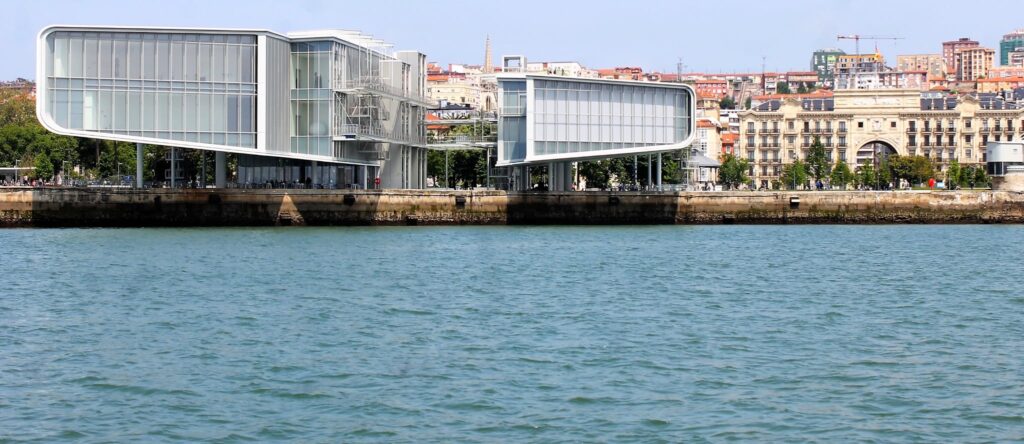
Justo enfrente (y con, incluso mejores vistas a la bahía) está el edificio que puso a Santander en el mapa del arte contemporáneo internacional: el Centro Botín, inaugurado en 2017 y diseñado por Renzo Piano, ganador del Pritzker en 1998.
Con Faro Santander a pocos metros, la ciudad reúne dos Pritzker prácticamente frente a frente, algo que muy pocas ciudades del mundo pueden presumir de tener a tan poca distancia.


El resto de la ruta: arte y arquitectura
La oferta cultural de Santander no se agota en estos dos nombres. En los últimos años la ciudad ha ido sumando piezas a este itinerario:
-
Naves de Gamazo, rehabilitadas en 2021 por GFA2 Y Fernández Abascal& Muruzábal para acoger la Fundación Enaire, con su colección de arte contemporáneo español.

Foto: web ministerio transportes -
El MAS (Museo de Arte de Santander), que reabrió sus puertas tras su renovación.

foto: mara pardo -
El Palacete del Embarcadero, restaurado en 2024 , uno de los edificios más fotogénicos del paseo marítimo.

-
Lafuente. Cultura Material, el nuevo espacio de 600 m² que Jose María Lafuente ha abierto en la calle Lope de Vega, casi haciendo esquina con el Paseo Pereda, donde organizará tres exposiciones anuales con el fondo que conservó tras vender parte de su colección al Museo Reina Sofía en 2022.

-
Muy pronto, el Archivo Lafuente, que se instalará en el antiguo edificio del Banco de España (proyecto de Voluar Arquitectura–Ceroarquitectura) bajo el paraguas del Museo Reina Sofía.
-
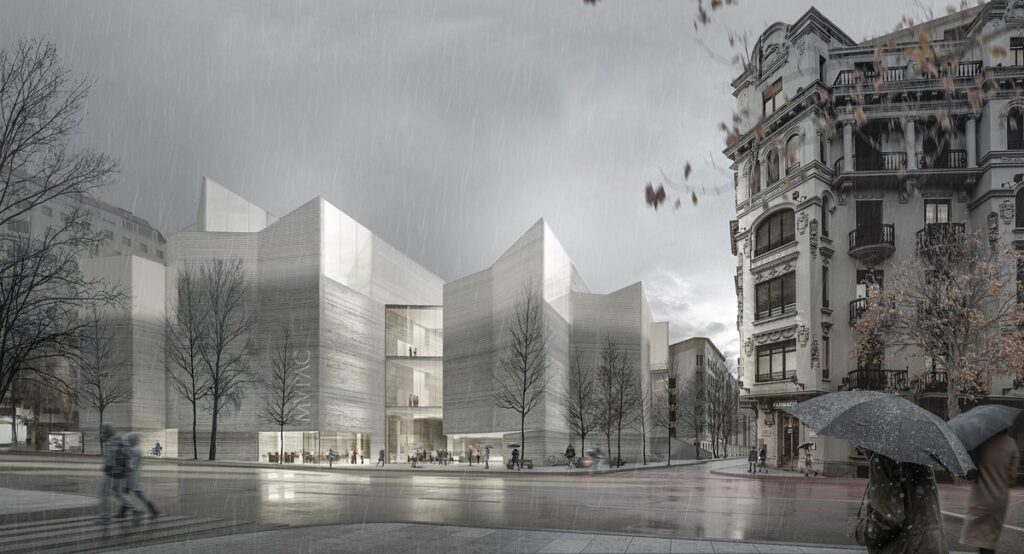
Y, con fecha de Diciembre parece que también abrirá, justo en Puerto Chico, el nuevo MUPAC, Museo de Prehistoria y Arqueología de Cantabria. La propuesta, de la firma catalana de Héctor Mendoza y Mara Partida h fue seleccionada en el concurso de ideas para construir la nueva sede del Museo de Prehistoria y Arqueología de Cantabria en Santander, que cuenta con 18.441 metros cuadrados construidos, de los cuales 7.500 están destinados a un uso administrativo como sede del Gobierno regional en el solar de la antigua Diputación de la Calle Casimiro Sainz, unido a los terrenos del antiguo Garaje Loriente.
Lo mejor de todo: puedes recorrer prácticamente toda esta oferta a pie, con la bahía de Santander —una de las más bonitas del mundo— acompañándote en todo momento.
Pocas ciudades ofrecen tanta densidad cultural y arquitectónica en un paseo tan corto y tan bonito.
¿Por qué merece la pena planear una escapada?
Si eres de los que viajan pensando en arquitectura, esta combinación de patrimonio recuperado (Edificio Pereda, Palacete del Embarcadero, Banco de España), grandes firmas internacionales (Chipperfield, Piano) y colecciones de primer nivel (Banco Santander, Reina Sofía, Enaire) convierte a Santander en una escapada cultural que ya compite con destinos mucho más mediáticos.
Y con la apertura de Faro Santander , la ciudad cierra el círculo de una transformación cultural que lleva casi diez años gestándose.
Apunta la fecha, reserva el hotel con vistas a la bahía y prepárate para caminar bastante menos de lo que imaginas para ver muchísimo más arte del que esperabas.
Sobre Faro Santander
Faro Santander es un proyecto cultural de la Fundación Banco Santander.
Es el nuevo centro de arte de la ciudad de Santander, donde arte, cultura y tecnología se encuentren en un entorno abierto y accesible a todos los públicos.
Faro Santander se ubica en el Edificio Pereda, antigua sede principal del Banco Santander y una de las construcciones más emblemáticas de la ciudad.
Un edificio histórico que renace ahora con la vocación de convertirse en un ambicioso espacio cultural innovador, integrador y conectado con la sociedad y el tejido cultural de Cantabria.

En la foto, David Chipperfield con el nieto del arquitecto del edificio Pereda , Javier González de Riancho, del mismo nombre, en la presentación del proyecto en 2019 en el Colegio de Arquitectos de Cantabria.
El diseño arquitectónico del centro ha sido confiado al arquitecto inglés David Chipperfield, ganador del premio Pritzker en 2023.
La apertura de Faro Santander marcará un nuevo hito para la ciudad, ofreciendo un lugar dinámico, estimulante y divertido, donde todo el mundo es bienvenido.
Sobre Fundación Banco Santander
Fundación Banco Santander trabaja para contribuir a la construcción de una sociedad más equitativa, inclusiva y sostenible. Con este objetivo desarrollan iniciativas agrupadas en tres líneas de actuación: el fomento de la cultura como herramienta para entender el mundo que nos rodea, la acción social para facilitar el progreso de los colectivos vulnerables y la educación y el emprendimiento como motor de la sociedad.
FARO SANTANDER
Paseo de Pereda 9-12, 39004 Santander (Cantabria), España
Entradas: en www.farosantander.com
Más información: www.farosantander.com

Santander’s Cultural “Golden Mile”:
Opening of FARO SANTANDER on September 8.

If you still think of Santander as “the city of the beach and rabas,” it’s time to update your mental map.
The Cantabrian capital has spent nearly a decade reinventing itself as one of Spain’s most interesting cultural destinations, and this fall brings the icing on the cake: on September 8, FARO SANTANDER—the new museum space designed by architect David Chipperfield—opens its doors.
And the best part: it’s not coming alone. It joins a route that we can now confidently call the bay’s cultural “Golden Mile.”
A short walk of just a few minutes where you’ll come across—no less—two buildings designed by Pritzker Prize winners (the “Nobel” of architecture), located practically across from each other.
The building you may have known until recently as the former headquarters of Banco Santander (the historic Pereda Building, designated a Site of Cultural Interest) has been transformed into a world-class museum.
The renovation was designed by David Chipperfield Architects, with IDOM serving as project manager and Ferrovial as the general contractor; it marks the first museum building the firm has constructed in Spain.
Here are some figures to give you an idea of the project’s scale:
-
More than 10,000 m² of usable floor space spread across ten levels.
-
About 3,000 m² dedicated to exhibition halls, distributed across five floors.
-
The top two levels will house a café-terrace and a restaurant, with spectacular views of the bay.
-
Three basement levels house the auditorium and technical facilities.
Chipperfield, who won the Pritzker Prize in 2023, has described the project as a gesture of generosity toward the city, transforming a bank building into a space dedicated to culture and civic life.
And what about sustainability?
This is where Faro Santander gets really interesting for lovers of responsible architecture: it has earned BREEAM Exceptional certification, with a design score of 92.96 points—the highest score achieved to date by a museum or cultural center anywhere in the world.
The renovation focused on reusing the existing structure rather than building from scratch (less waste, fewer emissions); it combines geothermal energy with thermal activation of the structure (TABS system) to climate-control the building; incorporates green roofs; reuses rainwater for irrigation; and facilitates access by bicycle.
What will be on display at Faro Santander?
From the day of the opening through January 10, 2027, the building will house Banco Santander’s own collection along with three exhibitions:
An exhibition dedicated to Leonora Carrington titled “Symptomatic Surrealism.”
“Masterpieces from the Banco Santander Collection,” curated by Maria Dolores Jiménez Blanco, offers a journey through art history from the Renaissance to the present day, featuring artists such as Titian, El Greco, Rubens, Velázquez, Goya, Tàpies, and Juan Uslé.
“Modern Mexico in the Gelman Santander Collection,” curated by the director of the Museum of Modern Art in Mexico, Marisol Argüelles, featuring works by Frida Kahlo, Diego Rivera, Rufino Tamayo, Orozco, and Siqueiros, among other giants of Mexican art.
The Other Pritzker in the Bay: Centro Botín
Right across the bay (and with even better views of the bay) stands the building that put Santander on the international contemporary art map: the Centro Botín, inaugurated in 2017 and designed by Renzo Piano, winner of the 1998 Pritzker Prize.
With Faro Santander just a few meters away, the city boasts two Pritzker Prize-winning buildings practically across from each other—a feat very few cities in the world can claim to have within such close proximity.
The rest of the route: art and architecture
Santander’s cultural offerings don’t end with these two landmarks. In recent years, the city has added new stops to this itinerary:
Naves de Gamazo, renovated in 2021 by GFA2 and Fernández Abascal & Muruzábal to house the Enaire Foundation, with its collection of contemporary Spanish art.
The MAS (Santander Art Museum), which reopened its doors following its renovation.
The Palacete del Embarcadero, restored in 2024, is one of the most photogenic buildings along the boardwalk.
Lafuente. Cultura Material, the new 600-square-meter space that Jose María Lafuente has opened on Lope de Vega Street, just off the corner of Paseo Pereda, where he will organize three annual exhibitions featuring the collection he retained after selling part of his collection to the Reina Sofía Museum in 2022.
And coming very soon: the Lafuente Archive, which will be housed in the former Bank of Spain building (a project by Voluar Arquitectura–Ceroarquitectura) under the umbrella of the Reina Sofía Museum.
Best of all: you can explore virtually all of these attractions on foot, with Santander Bay—one of the most beautiful in the world—accompanying you every step of the way.
Few cities offer such a concentration of cultural and architectural treasures along such a short and beautiful stroll.
Why is it worth planning a getaway here?
If you’re the kind of traveler who focuses on architecture, this combination of restored heritage sites (the Pereda Building, the Palacete del Embarcadero, the Bank of Spain), major international firms (Chipperfield, Piano), and world-class collections (Banco Santander, Reina Sofía, Enaire) makes Santander a cultural getaway that already rivals much more high-profile destinations.
And with the opening of Faro Santander on September 8, the city brings to a close a cultural transformation that has been in the works for nearly ten years.
Mark your calendar, book a hotel with a view of the bay, and get ready to walk far less than you imagine to see far more art than you expected.
About Faro Santander
Faro Santander is a cultural project of the Banco Santander Foundation.
It is the new art center in the city of Santander, where art, culture, and technology come together in an open environment accessible to all audiences.
Faro Santander is located in the Pereda Building, the former headquarters of Banco Santander and one of the city’s most iconic structures.
This historic building is now being reborn with the goal of becoming an ambitious cultural space that is innovative, inclusive, and connected to society and the cultural fabric of Cantabria.
The architectural design of the center has been entrusted to British architect David Chipperfield, winner of the 2023 Pritzker Prize.
The opening of Faro Santander will mark a new milestone for the city, offering a dynamic, stimulating, and fun place where everyone is welcome.
About the Banco Santander Foundation
The Banco Santander Foundation works to help build a more equitable, inclusive, and sustainable society. To this end, it carries out initiatives grouped into three areas of focus: promoting culture as a tool for understanding the world around us; social action to support the progress of vulnerable groups; and education and entrepreneurship as drivers of society.
FARO SANTANDER
Paseo de Pereda 9-12, 39004 Santander (Cantabria), Spain
Tickets: coming soon at www.farosantander.com
More information: www.farosantander.com
contenidos: mara pardo